
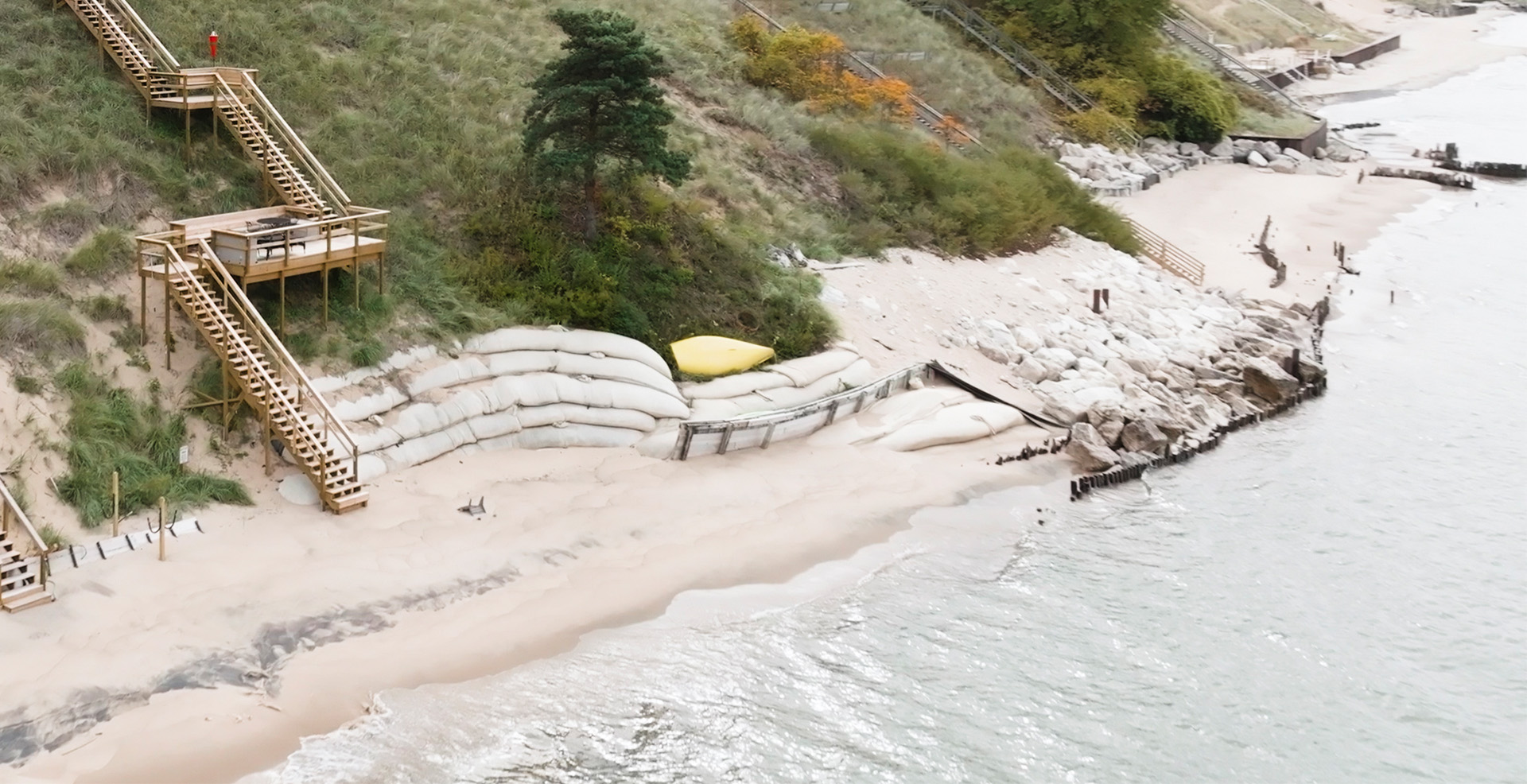
If you own waterfront property, protecting your shoreline is essential to preserving both your land and your investment. Seawall installation plays a critical role in defending against erosion, wave action, and fluctuating water levels. Below, we answer some of the most common questions homeowners ask about seawalls and how our seawall builders in West Michigan help protect lakeshore and riverfront properties year after year.
A seawall is a structural barrier built along the shoreline to prevent erosion and land loss caused by waves, currents, ice, and rising water levels. It acts as a buffer between the water and your property, helping stabilize the shoreline and protect nearby structures such as homes, decks, and landscaping.
Without proper shoreline protection, erosion can slowly eat away at your property, leading to unsafe conditions and costly damage. Seawalls help maintain the integrity of your land, prevent soil washout, and reduce the risk of foundation damage. In areas with heavy wave activity or seasonal freeze-thaw cycles, a well-built seawall is especially important.
Several are commonly used, depending on shoreline conditions and property needs. These include concrete seawalls, steel seawalls, vinyl seawalls, and composite systems. Each option offers different benefits in terms of durability, appearance, and maintenance. Choosing the right material depends on factors like water conditions, soil type, and long-term goals for the property.
When properly designed and installed, seawalls can last for many years. Concrete and steel seawalls often provide the longest lifespan, especially when paired with proper drainage and routine maintenance. Environmental factors such as water movement, ice pressure, and soil conditions can impact longevity, which is why professional installation is key.
Yes, seawalls should be inspected periodically to catch early signs of wear or damage. Common issues include cracking, leaning, erosion behind the wall, or drainage failures. Addressing small problems early can extend the life of the seawall and prevent more expensive repairs or replacement later on.
In most cases, yes. are regulated to protect waterways and surrounding ecosystems. Permits may be required at the local, state, or federal level before installation or major repairs can begin. An experienced contractor can help guide you through the permitting process and ensure all regulations are met.
A properly constructed seawall can be a valuable asset for waterfront properties. By protecting against erosion and preserving usable land, seawalls help maintain the long-term value of your home. They also improve safety and can enhance the overall appearance of the shoreline when designed thoughtfully.
If you notice visible cracks, bowing, sinking, or water washing out soil behind the wall, it may be time for professional evaluation. In some cases, repairs are sufficient, while older or severely damaged seawalls may require full replacement to ensure continued protection.
Protecting your shoreline is not a DIY project. It requires expertise, proper materials, and a deep understanding of local water conditions. Whether you’re installing a new seawall or evaluating an existing one, working with our seawall builders in West Michigan ensures your waterfront property is protected for years to come. Call Waterfront Solutions at (616) 900-8358 or contact us online to get started.