
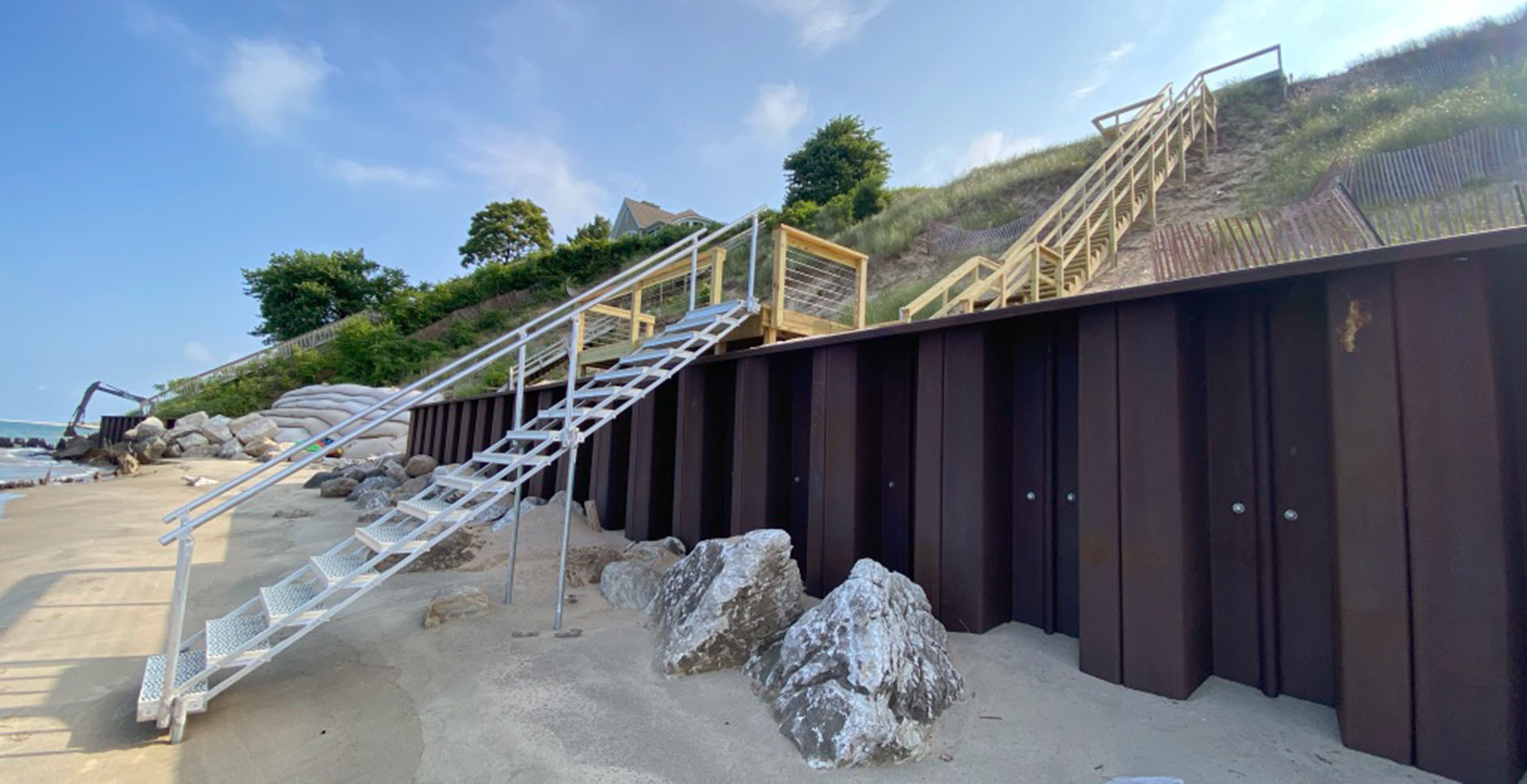
If your property sits on a slope or near the water, you’ve probably heard two terms come up again and again: retaining walls and seawalls. They may look similar at first glance, but they serve different purposes—and choosing the wrong one can lead to serious drainage issues, erosion, or costly repairs down the road. As West Michigan retaining and seawall builders, we often help homeowners understand which structure they actually need based on their property layout, soil conditions, and exposure to water.
A retaining wall is built to hold back soil and manage changes in elevation. It’s commonly used in yards with slopes, hillsides, or landscaping that needs extra support. The point of retaining wall installation is to resist the pressure of soil pushing against the structure, especially after heavy rainfall or snowmelt.
In West Michigan, retaining walls are especially useful because freeze-thaw cycles and heavy seasonal rains can shift soil over time. A properly engineered wall can protect your yard and help prevent long-term damage.
A seawall is built along the shoreline to protect land from erosion caused by waves, water level changes, and storm surges. Unlike with retaining walls, seawall construction is designed to withstand constant contact with water and wave impact.
In areas near Lake Michigan and inland lakes, seawall installation is often a necessary investment. Without one, water can gradually eat away at the shoreline and undermine the land supporting your property.
Even though both walls hold back material, their function and design are not the same.
Sometimes, a property may require both. This may especially be the case if the yard slopes down toward the lake. In those cases, a seawall protects the shoreline, while retaining walls help stabilize the landscaping above it.
and may seem interchangeable, but they’re built to solve different problems—and the right choice depends on what your property is up against. Whether you’re battling erosion at the waterline or trying to stabilize a sloped backyard, working with experienced West Michigan retaining and seawall builders can help you protect your investment and create a shoreline (or landscape) that lasts for years. Call Waterfront Solutions at (616) 900-8358 or contact us online to get started.